
Episode 4: Overthinking Isn't the Problem, Your Nervous System Is.
Why overthinking isn't a character flaw, it's often a survival strategy your nervous system learned long ago.
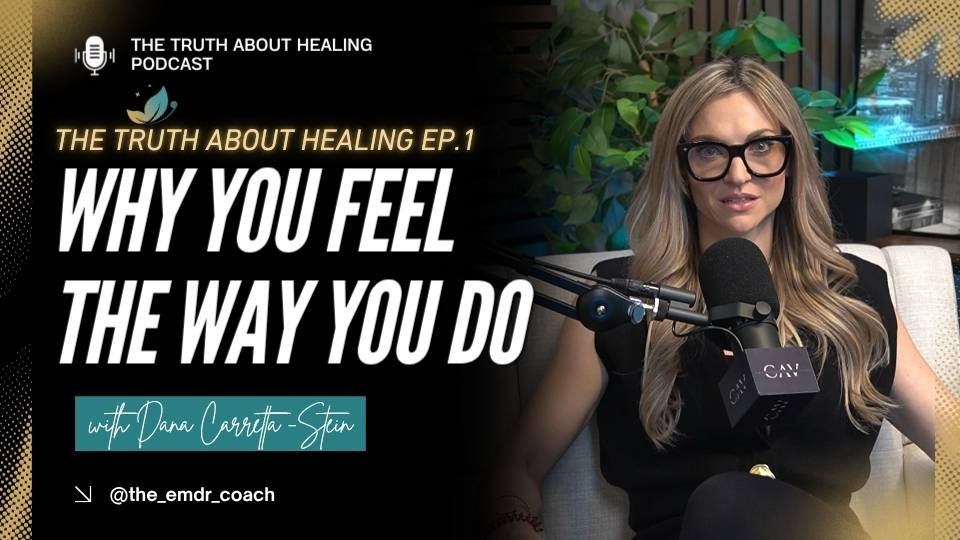
Welcome to Episode 4 of The Truth About Healing Podcast.
Most people think overthinking is simply thinking too much.
But what if it's actually something deeper?
In this episode, Dana and Claudio explore why Overthinking Is Not Just Thinking Too Much and how overthinking often develops as a response to stress, uncertainty, trauma, and nervous system dysregulation.
Together, they unpack the difference between healthy planning and unhelpful rumination, discuss why overthinking can feel productive even when it's keeping us stuck, and share practical strategies for getting out of your head and back into the present moment.
Whether you've struggled with anxiety, perfectionism, hypervigilance, or constantly replaying conversations in your head, this episode will help you understand what's really happening beneath the surface.
Listen on Your Favorite Podcast Platform
Episode Highlights
In This Episode
Why overthinking often starts as an adaptive survival strategy
The difference between planning and rumination
How trauma and hypervigilance contribute to overthinking
Why movement helps interrupt overthinking loops
The connection between nervous system dysregulation and repetitive thoughts
How emotional safety affects our ability to regulate thoughts
Why overthinking often prevents us from feeling emotions
Practical tools for getting out of your head and into the present moment
Memorable Quote
"The quickest way to get out of your head is to get into your body."
Want to Respond to This Episode or Ask a Question?
I'd love to hear from you.
Use the form below to:
Share feedback about this episode
Ask a question for a future episode
Suggest a topic you'd like covered
Share your experience or insight
Further Learning & Resources
Discover journals, workbooks, consultation resources, and recommended tools designed to support both personal healing and professional growth.
EMDR Therapy Progress Journal
The EMDR Therapy Progress Journal helps clients track healing progress, identify patterns, document insights, and stay connected to their therapeutic journey between sessions.
Perfect for:
EMDR clients
Trauma recovery work
Reflection between sessions
Tracking healing milestones
EMDR Coach Treatment Planning Workbook
Designed specifically for EMDR therapists, this workbook helps simplify case conceptualization, target sequencing, and treatment planning.
Ideal for:
EMDR-trained clinicians
EMDR consultation groups
Organizing complex cases
Strengthening treatment planning skills
Meet Dana Carretta-Stein, LMHC

Dana Carretta-Stein is an LMHC, EMDRIA Approved Consultant, founder of The EMDR Coach, and founder of Peaceful Living Mental Health Counseling (PLMHC).
Her work focuses on trauma-informed therapy, nervous system healing, EMDR therapy, attachment patterns, and helping people understand the deeper roots behind emotional and behavioral patterns.
Dana blends neuroscience, trauma-informed education, and direct honesty in a way that helps listeners feel both validated and challenged to think differently about healing.
Her core belief: Symptoms make sense when you understand the nervous system underneath them.
Trauma-Informed Therapy Through PLMHC
Peaceful Living Mental Health Counseling provides trauma-informed therapy for children, teens, and adults.
Services include support for:

Overthinking
Burnout
Trauma
Emotional overwhelm
Nervous system dysregulation
PLMHC offers in-person therapy in Scarsdale and virtual therapy throughout New York, New Jersey, Connecticut, and Florida.
If you’ve been searching for trauma-informed therapy in Westchester or EMDR therapy in Scarsdale, support is available.
Full Episode Transcript
Overthinking Is Not Just Thinking Too Much: Welcome Back
Dana: Welcome everybody back to another episode of The Truth About Healing.
How are you doing today, Claudio?
Claudio: Hello, hello. I'm good. Happy to be here.
How was your weekend?
Dana: It was good. We just came off Easter break, and I had a full week with the kids home from school.
We went to Florida.
It was great spending time together, but by the time we got home I looked at my mom and said:
"I just need a minute."
I completely decompensate without my routine.
Claudio: You needed the routine back.
Dana: Exactly.
It's fascinating how quickly human beings miss the very things they often complain about.
Overthinking Is Not Just Thinking Too Much, It's Often Familiar
Claudio: That's actually true in therapy too, right?
People stay attached to unhealthy habits.
Relationships they know aren't good for them.
Patterns they know aren't helping.
And they stay because it's familiar.
Dana: Exactly.
We'll often choose what's familiar over what's healthy.
Even when familiarity is causing us pain.
Because familiarity creates predictability.
And predictability feels safe to the nervous system.
That's an important concept because overthinking works in a very similar way.
My Relationship With Overthinking
Claudio: Overthinking has been a part of my life forever.
Growing up, I never saw it as a problem.
I saw it as a strength.
It helped me prepare.
It helped me plan.
It helped me think through different outcomes.
I always thought:
"This is helping me."
And honestly, for a long time it did.
It helped me succeed.
It helped me stay ahead.
It helped me feel prepared.
The problem wasn't the thinking.
The problem came later.
Eventually I realized I wasn't just preparing anymore.
I was getting stuck.
I was going in circles.
I was creating endless scenarios.
Thinking about what people might say.
What they might think.
How things could go wrong.
And suddenly it wasn't helping anymore.
It was trapping me.
When Overthinking Stops Helping
Dana: That's such an important distinction.
Because overthinking doesn't start as a problem.
A lot of times it starts as something that genuinely helps.
The challenge is that what got you here won't necessarily get you there.
A strategy that helped you survive one chapter of life may not be the strategy that serves you now.
That's true for overthinking.
It's true for perfectionism.
It's true for people-pleasing.
It's true for many of the coping strategies we develop.
At some point we have to ask:
"Is this still serving me?"
The Difference Between Thinking and Rumination
Claudio: That's exactly where I found myself.
I realized I could identify the problem.
I knew I was overthinking.
I knew it wasn't helping anymore.
But then I hit another wall.
What do you do once you know?
How do you stop?
How do you undo twenty years of operating this way?
Because there was a lot of positive attachment to it.
It had helped me.
So how do you suddenly let it go?
Overthinking Is Not Just Thinking Too Much, It's About Action
Dana: The first thing I want people to understand is that not all thinking is bad.
Planning is healthy.
Being intentional is healthy.
Thinking through decisions is healthy.
The question is:
Does your thinking lead to action?
Or does it prevent action?
That's the difference.
When thinking becomes obsessive.
When you keep replaying possibilities.
When you keep creating scenarios.
When you keep searching for certainty that never comes.
That's when we move into rumination.
And rumination often keeps people stuck.
The Quickest Way Out of Overthinking
Dana: One of my favorite nervous system principles is this:
The quickest way to get out of your head is to get into your body.
When people are overthinking, they're usually trapped in mental loops.
The nervous system is activated.
The thoughts keep spinning.
The body wants movement.
Movement creates regulation.
So if you're stuck overthinking, go for a walk.
Stretch.
Move.
Exercise.
Dance.
Do something physical.
Because movement helps the nervous system complete the cycle that thinking alone cannot.
Why Movement Interrupts the Loop
Dana: Think about overthinking like pressing the gas pedal and the brake pedal at the same time.
The engine is running.
The wheels are spinning.
But you're not going anywhere.
Movement helps release that energy.
It helps create forward momentum.
That's why so many people find clarity while walking.
Or exercising.
Or cleaning.
Or gardening.
The body starts moving and suddenly the thoughts begin moving too.
Not because you're forcing them to.
But because the nervous system is regulating.
A Simple Exercise for Overthinking
Dana: One exercise I often teach clients is incredibly simple.
Put your hands together.
Then focus on feeling your pulse in your fingertips.
That's it.
Notice the sensation.
Don't analyze it.
Don't judge it.
Just notice it.
Because when you're focused on sensation, you're no longer trapped inside the thought loop.
You're shifting attention into the present moment.
What Happened During the Exercise
Claudio: That's actually fascinating.
Because while we were doing it, I noticed something.
For a moment I stopped thinking about everything else.
I stopped thinking about the conversation.
I stopped thinking about whether I was doing it right.
I was focused on the sensation.
And suddenly I wasn't stuck in my head anymore.
Dana: Exactly.
That's the goal.
Not perfection.
Presence.
Your senses are one of the fastest pathways back to the present moment.
And overthinkers tend to be very good at focusing.
We just focus on the wrong thing.
The goal isn't to stop focusing.
It's to redirect the focus.
Overthinking Is Not Just Thinking Too Much, It's Often Disconnection From the Present
Dana: One of the reasons grounding exercises work so well is because overthinking pulls us out of the present moment.
When you're overthinking, you're usually somewhere else.
You're in the future.
You're replaying the past.
You're imagining scenarios.
You're anticipating outcomes.
You're trying to solve problems that haven't happened yet.
The nervous system isn't actually responding to what's happening right now.
It's responding to what might happen.
That's why grounding matters.
Grounding brings you back to reality.
Back to the present.
Back to what is actually happening.
The 5-4-3-2-1 Grounding Technique
Dana: One of the easiest grounding tools people can use is the 5-4-3-2-1 exercise.
It's simple.
Look around and identify:
5 things you can see
4 things you can touch
3 things you can hear
2 things you can smell
1 thing you can taste
The goal isn't to distract yourself.
The goal is to reconnect with the present moment.
When you engage your senses, you activate different parts of the brain.
You interrupt the overthinking cycle.
And you remind your nervous system that you're here.
Not in the future.
Not in the past.
Right here.
Right now.
Why People Resist the Things That Help
Claudio: One thing I've noticed is that sometimes I know exactly what would help me.
And then I don't do it.
I know I should go for a walk.
I know I should exercise.
I know I should take a break.
And somehow I still don't.
Why is that?
Dana: Because human beings are fascinating.
We often resist the very things we need most.
Part of that is nervous system related.
Part of it is psychological.
And part of it is because healthy habits don't always provide immediate rewards.
Many unhealthy coping strategies provide instant relief.
Scrolling.
Avoiding.
Checking out.
Overthinking.
Those behaviors feel productive in the moment.
Even when they're not helping long term.
Choice Changes Everything
Dana: One of the things I talk about often is the difference between choice and obligation.
When people tell themselves:
"I have to go for a walk."
"I have to exercise."
"I have to meditate."
Their nervous system often pushes back.
Nobody likes being told what to do.
Even by themselves.
But when the language changes to:
"I get to go for a walk."
"I choose to move my body."
"I can take care of myself."
Everything shifts.
Because now there's agency.
Now there's choice.
And choice creates flexibility.
Overthinking Is Not Just Thinking Too Much, It's Often an Attempt to Avoid Feeling
One of the hardest truths about overthinking is that it's often protecting us from emotions.
Thinking feels safer than feeling.
Analyzing feels safer than vulnerability.
Creating plans feels safer than uncertainty.
So the brain keeps thinking.
Keeps planning.
Keeps analyzing.
Because as long as we're thinking, we don't have to feel what's underneath.
But eventually the emotions are still there.
Waiting.
The nervous system knows they're there.
And healing often begins when we're willing to stop analyzing for a moment and start paying attention to what we're actually feeling.
Why Story Follows State
Dana: One of my favorite concepts is:
Story follows state.
The state of your nervous system influences the stories you tell yourself.
When you're regulated, life looks different.
When you're dysregulated, life looks different.
The facts may be exactly the same.
But your interpretation changes.
That's why people can wake up one day feeling optimistic and the next day feeling hopeless.
Nothing necessarily changed externally.
The nervous system changed.
And once the nervous system changes, the story changes too.
The Role of Breathwork
Claudio: People talk about breathwork all the time.
Does it actually work?
Dana: Yes.
But maybe not for the reason people think.
Breathing exercises help activate the parasympathetic nervous system.
That's the branch of the nervous system responsible for rest, recovery, and regulation.
When we intentionally slow our breathing, we send signals to the body that we're safe.
That doesn't mean anxiety instantly disappears.
It means we're creating conditions that support regulation.
Think of it as creating space.
The thoughts might still be there.
But they often become less intense.
Less urgent.
Less overwhelming.
Regulation Creates Perspective
One of the biggest misconceptions about healing is that people need to think their way out of anxiety.
Many times they don't.
They need to regulate first.
Once the nervous system settles, perspective naturally improves.
Options become visible again.
Solutions become easier to access.
Decisions become clearer.
This is why trying to solve major life problems while emotionally overwhelmed often backfires.
The nervous system isn't in a state where clear thinking is possible.
Regulation comes first.
Then perspective.
Then problem-solving.
Why Overthinkers Struggle With Uncertainty
At its core, overthinking is often an attempt to create certainty.
The brain believes:
"If I think about this enough, I'll find the answer."
"If I prepare enough, nothing bad will happen."
"If I analyze every possibility, I'll stay safe."
The problem is that certainty doesn't exist.
Life is uncertain.
Relationships are uncertain.
Growth is uncertain.
Healing is uncertain.
And at some point, every person has to decide:
Am I willing to move forward without having all the answers?
Because that's where growth happens.
Not in certainty.
But in the willingness to tolerate uncertainty.
Overthinking Is Not Just Thinking Too Much, It's a Nervous System Pattern
One of the most important takeaways from this episode is that overthinking is not a character flaw.
It's not evidence that you're weak.
It's not proof that something is wrong with you.
More often, it's a nervous system pattern.
A strategy.
An adaptation.
Something that developed because it helped you feel safer at one point in your life.
And if it was learned, it can be changed.
Not overnight.
Not through willpower alone.
But through awareness, practice, regulation, and compassion.
The goal isn't to stop thinking.
The goal is to stop letting thinking run your life.
Overthinking, Perfectionism, and the Need to Get It Right
Claudio: I think a lot of overthinkers are also perfectionists.
At least I know that's true for me.
Part of the reason I overthink is because I want to make the right decision.
I don't want to make a mistake.
I don't want to get it wrong.
Dana: Absolutely.
Perfectionism and overthinking often travel together.
Because perfectionism creates the belief that there is one perfect answer.
One perfect choice.
One perfect path.
And if we think long enough, maybe we'll find it.
The problem is that life rarely works that way.
Most decisions aren't about finding the perfect answer.
They're about making the best decision with the information you have right now.
When people wait for certainty, they often end up waiting forever.
Why Certainty Is an Illusion
One of the biggest challenges for overthinkers is accepting uncertainty.
The nervous system wants guarantees.
It wants reassurance.
It wants to know exactly what's going to happen.
But healing often requires us to tolerate uncertainty.
There are no guarantees in relationships.
No guarantees in parenting.
No guarantees in business.
No guarantees in healing.
At some point, growth requires trusting yourself enough to move forward without knowing exactly how everything will turn out.
That can feel uncomfortable.
But discomfort isn't the same thing as danger.
And that's an important distinction.
Overthinking Is Not Just Thinking Too Much, It's a Search for Control
Many people don't realize that overthinking is often an attempt to gain control.
If I think about it enough, maybe I can prevent something bad from happening.
If I analyze every outcome, maybe I won't get hurt.
If I prepare for every possibility, maybe I'll feel safe.
The challenge is that life is not fully controllable.
And the more we chase certainty, the more exhausted we become.
The goal isn't control.
The goal is flexibility.
The ability to adapt.
The ability to trust yourself.
The ability to respond when challenges arise.
That's very different from trying to predict every possible outcome.
Practical Strategies for Managing Overthinking
Throughout this episode, Dana emphasizes that reducing overthinking doesn't start with forcing thoughts away.
It starts with changing your relationship to them.
Some practical strategies include:
Moving your body when you notice you're stuck in a thought loop
Using grounding exercises such as the 5-4-3-2-1 technique
Practicing breathwork to support nervous system regulation
Asking yourself whether your thinking is leading to action or preventing it
Bringing attention back to physical sensations
Recognizing when you're searching for certainty that doesn't exist
Focusing on the next step instead of the entire journey
The goal isn't perfection.
The goal is progress.
What If You Didn't Need Another Thought?
One of the most powerful questions from this episode is:
What if you don't need another thought?
What if the answer isn't hidden in another hour of analysis?
What if the answer isn't buried inside another scenario?
What if the next step is already clear?
Many people spend so much time thinking about action that they never actually take action.
And often, movement creates the clarity that thinking could not.
Sometimes the answer arrives after the first step.
Not before it.
Overthinking Is Not Just Thinking Too Much, It's Often Fear in Disguise
Fear doesn't always look like fear.
Sometimes it looks like planning.
Sometimes it looks like researching.
Sometimes it looks like preparing.
Sometimes it looks like overthinking.
When we recognize that fear may be underneath the thinking, we can respond differently.
Instead of trying to eliminate the fear, we can acknowledge it.
We can understand it.
And we can choose to move forward anyway.
That's courage.
Not the absence of fear.
But the willingness to act despite it.
The Goal Isn't to Stop Thinking
One of the most important takeaways from this conversation is that the goal is not to stop thinking.
Thinking is valuable.
Thinking helps us solve problems.
Thinking helps us learn.
Thinking helps us grow.
The goal is to develop a healthier relationship with thinking.
One where thoughts are tools.
Not traps.
One where thinking supports action instead of replacing it.
One where the nervous system feels safe enough to let go of the constant need for certainty.
Final Thoughts
If you've ever found yourself replaying conversations, analyzing decisions, worrying about the future, or struggling to quiet your mind, you're not alone.
Overthinking is incredibly common.
And it's often much more than thinking too much.
It's frequently a nervous system response.
A survival strategy.
An attempt to create safety.
The good news is that awareness creates choice.
And choice creates change.
The more you understand why you overthink, the easier it becomes to respond differently.
Not with judgment.
Not with shame.
But with curiosity and compassion.
Because healing doesn't begin when you stop thinking.
It begins when you understand what your nervous system has been trying to accomplish all along.
Closing Thoughts
Thank you for joining us for another episode of The Truth About Healing Podcast.
If this conversation resonated with you, share it with someone who might need to hear it.
And remember:
The quickest way to get out of your head is often to reconnect with your body.
We'll see you next time.
Subscribe to The Truth About Healing Podcast
Never miss an episode.
Subscribe for conversations about:
Trauma healing
EMDR therapy
Nervous system regulation
Therapist growth
Mental health education
Personal development

Comments